The Rise of Corporate Venture Building (New-Business Building)
CEOs are increasingly prioritizing corporate venture building as a key driver of growth despite economic challenges.
50% of CEOs Prioritize Venture Growth
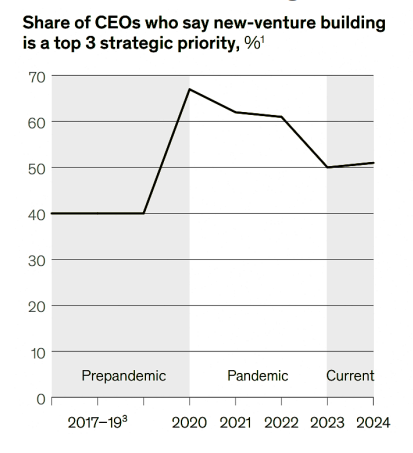
Half of CEOs rank venture building among their top three strategic priorities, reinforcing its resilience despite economic headwinds.
Venture Building Remains Strong Post-Pandemic
While the share of CEOs focusing on venture building dipped after COVID-19, it remains higher than pre-pandemic levels, showing a long-term shift in corporate strategy.
Generative AI is a Key Focus
60% of executives plan to build AI-powered ventures in the next five years, making AI-driven growth a dominant trend.
Funding is a Constraint but Solvable
Limited capital is the top barrier for 36% of companies, but those securing external capital or reallocating resources are seeing higher success rates.
Investment Drives Outsize Growth
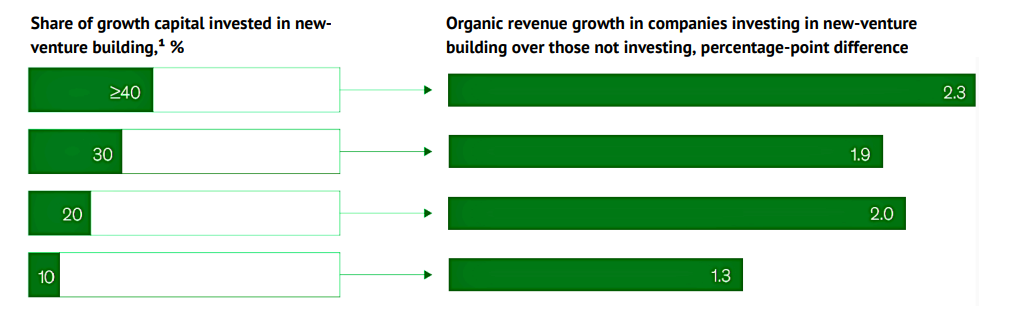
Companies investing 20%+ of growth capital into venture building achieve superior revenue growth, proving it is a high-ROI strategy.
The 20% Investment Sweet Spot
Companies allocating at least 20% of growth capital to ventures achieve 2 percentage points higher revenue growth than those investing less.
Larger Firms See Even Bigger Gains
Companies with $1 billion+ in revenue that invest heavily in venture building experience 2.5 percentage points higher revenue growth.
Key Capabilities of Expert Venture Builders
Organizations with structured venture-building programs experience double the success rate of less-experienced firms, demonstrating that expertise matters.
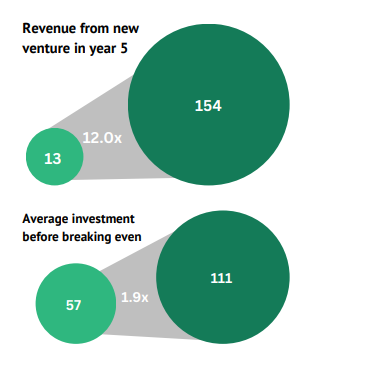
Revenue of and investment in new ventures,
¹ by new-venture-building maturity,
² $ million
Experts Achieve 2x the Success Rate
Companies with mature venture-building capabilities see twice the rate of ventures meeting or exceeding growth expectations compared to novices.
Expert Ventures Generate 12x More Revenue
In their fifth year, expert-built ventures achieve $154 million in revenue, while novice-built ventures barely reach $13 million, showing the compounding effect of expertise.
Portfolio Approach Reduces Failure Risks
Experts build an average of six ventures in five years, compared to novices who build less than two, spreading risk and learning across multiple bets.
Specialized Talent Accelerates Scaling
25% of expert firms can offer higher compensation to attract venture building talent, compared to just 13% of novices, allowing them to build superior teams.
Uncovering Hidden Growth Assets
87% of companies have underutilized assets that can be transformed into revenue-generating ventures, but few capitalize on them.
Data Monetization is the Biggest Untapped Asset
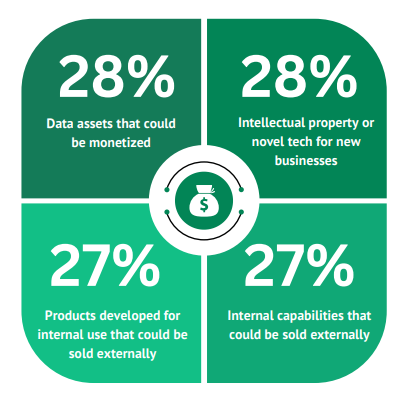
Across industries, data assets are the most commonly cited unrealized revenue source, with financial services firms leading in potential.
IP and Novel Tech Hold Massive Value
41% of tech, media, and telecom firms see commercial potential in their intellectual property, yet many fail to commercialize these assets effectively.
Internal Products Can Be Externalized
Healthcare and consumer goods firms frequently develop products for internal use that could be sold externally, creating immediate monetization opportunities.
Corporate Sub-Brands Can Be Scaled
Subscale ventures within large organizations often remain underfunded; companies that accelerate them can unlock significant growth potential.
The Role of AI & Sustainability in Venture Building
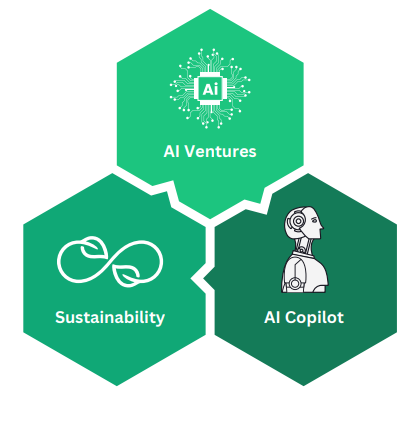
AI and sustainability are the fastest-growing venture themes, with 60% of leaders actively exploring AI-driven business models.
AI Ventures are the Top Priority
60% of executives expect to build AI-powered ventures in the next five years, up 11 percentage points from 2023.
Sustainability Ventures Have Surged in Importance
Environmental ventures have risen to the second-most common category, moving up from sixth place in 2022 to fourth in 2023 and now second in 2024.
AI Copilot Businesses Lead the AI Boom
50% of companies investing in AI ventures are focused on AI copilots that reduce effort and improve decision-making.
AI Ventures are in Early-Stage Development
While 73% of AI ventures are still in ideation or early development, 13% have reached value realization, with pharma leading at 22%.
Ready to talk?
We work with ambitious leaders who want to define the future, not hide from it. Together, we achieve extraordinary outcomes.