
Regional PE & Asset Management Market Dynamics
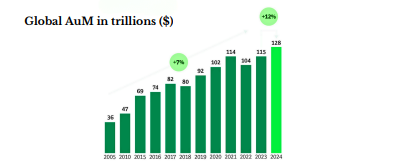
- Global AuM reaches new heights: Assets under management hit a record $128 trillion in 2024, up 12% year on-year, marking a robust rebound from 2022’s downturn
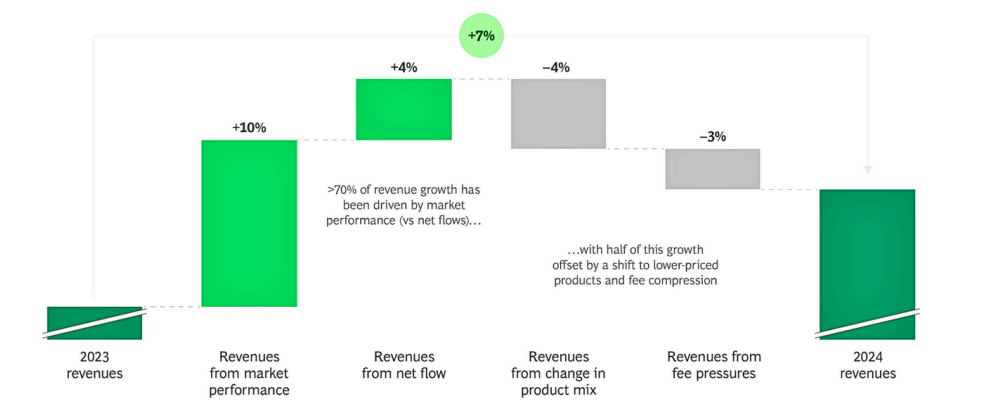
- Revenue driven by markets: Fully 70% of revenue growth in 2024 was market-performance-driven, underscoring persistent vulnerability to external volatility
- Structural headwinds: Margin compression, intensifying competition, and shifting investor preferences toward passive and alternative products are constraining profitability
- United States (Private Equity): Total PE AUM reached $3.128 trillion as of September 2024, the highest since December 2020
Strategic Imperatives for Business Reinvention
Three forces reshaping the industry:
- Product & distribution evolution: Clients demand hyper-personalized, direct-to-investor models.
- Consolidation: Strategic M&A to achieve scale and broaden capabilities.
- Radical cost optimization: Zero-based budgeting and process streamlining for resilience.
Cost-structure trifurcation:
- Investment management & trade execution account for 30–40% of total costs and grew at a 6% CAGR (2022–24).
- Firms now align as “alpha shops, ” “beta factories, ” or “distribution powerhouses, ” each with distinct cost trade-offs.
The Six-Pillar Asset Management Blueprint
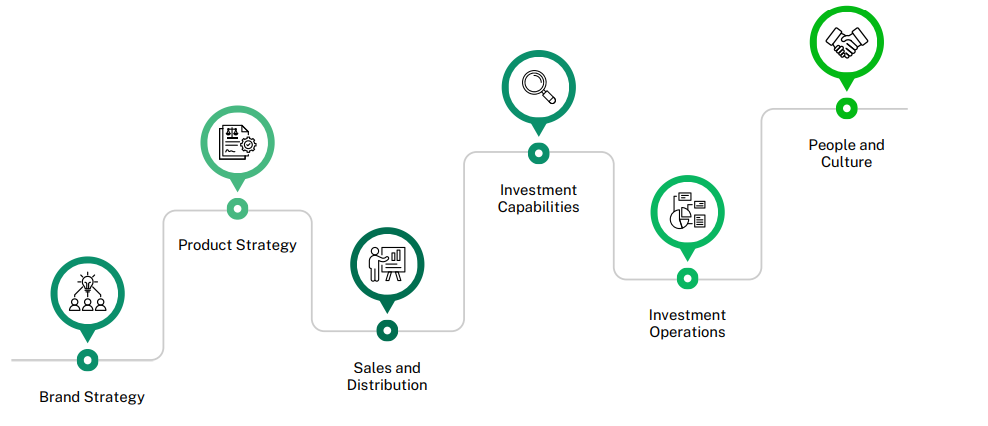
- Brand: 97% of executives see brand as a critical differentiator.
- Products: 83% are expanding into new investment strategies; 74% pursue hyper-customization.
- Distribution: 91% plan to transform their distribution value chain by 2025.
- Investment Capabilities: AI, analytics, and alternative data fuel next-gen alpha.
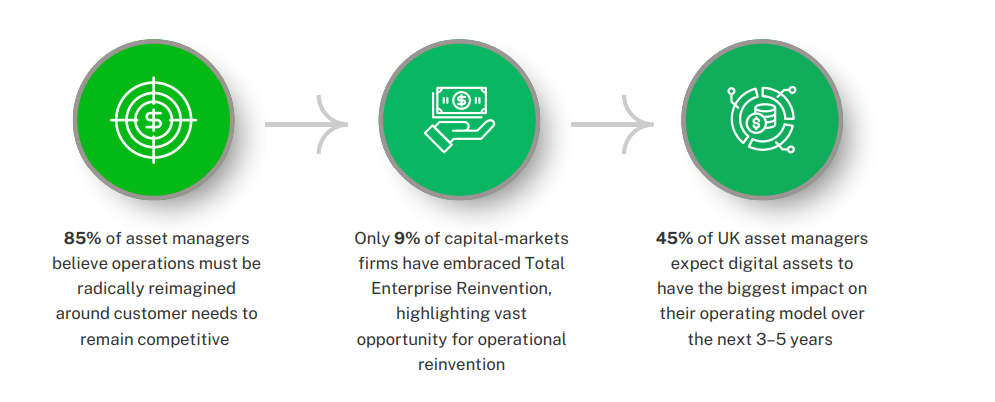
- Operations: 85% believe operations must be radically reimagined for customer centricity.
- Talent & Culture: Blending humans and machines to drive innovation.
AI & Data-Driven Value Generation
Technology as value engine:
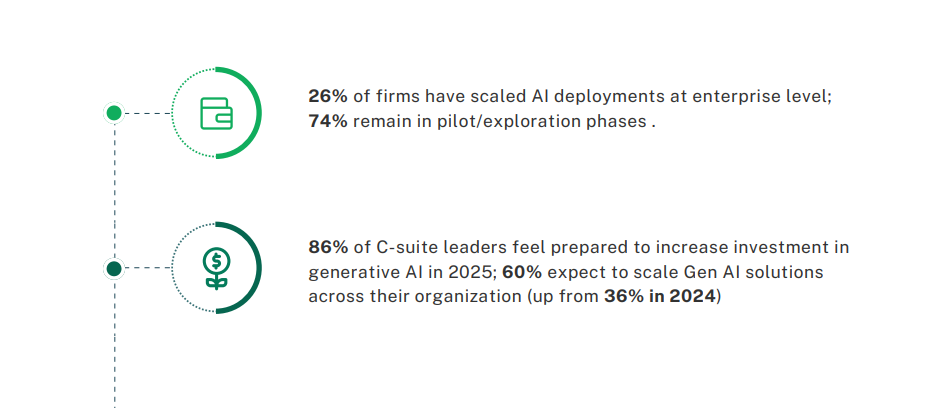
- Only 26% of firms have scaled AI deployments; 74% remain in pilot/exploration phases.
- AI and alternative data at scale expected to shift from experimental to mainstream by 2025.
Active vs. passive flows:
- Passive net inflows outpaced active in 2024, but active strategies show signs of stabilization amid volatility.
PE advantage:
- Private markets’ illiquidity premium and closer alignment of interests provide resilience.
Customer-Centric Operating Model Transformation
Customer-centric operating models:
- 85% of firms say they must radically restructure operations for competitive differentiation.
- Build globally consistent, scalable platforms that embed automation and client-centric processes.
Cost discipline:
- Zero-based cost reviews eliminate redundancies and focus spend on highvalue activities.
PE-specific ops:
- Streamline deal execution workflows, automate performance reporting, and integrate real-time risk monitoring. Adopt cloud-native solutions for fund administration and investor reporting.
Future-Ready Talent & Leadership Strategies
- Humans + machines: Redefine roles to blend AI augmentation with human judgment.
- Change-mindset culture: Embed innovation in every function; incentivize experimentation and rapid prototyping.
- Develop agile reskilling programs focused on digital, data, and ESG competencies.
- Regional talent strategy: Forge partnerships with Saudi universities and training academies under Vision 2030.
- Attract global talent via PIF-backed initiatives and strengthen in-house digital expertise.
Planning your next acquisition in today ’s volatile markets? Let’s collaborate.